Most cylinder block failures are preventable with proper maintenance. Backed by industry experience from Volgen Power, this guide covers the 7 most common cylinder block problems, their root causes, exact symptoms, and the OEM part numbers required for reliable replacement.
Quick Answer
The most common diesel cylinder block problems are: (1) Freeze cracking from coolant freezing in cold weather, (2) Cylinder bore scoring from oil starvation or contamination, (3) Main bearing web cracks from crankshaft walk, (4) Oil gallery corrosion and sludge, (5) Coolant passage erosion from electrolysis, (6) Warpage of cylinder bores from overheating, and (7) Core plug (freeze plug) failure.
- Cylinder block replacement ranges from USD 1,200 to 8,000 for bare blocks
- Long block assemblies (with head) range USD 5,500-18,000
- Freeze cracking is the #1 cause of block failure in cold climates
- Always check bore size and piston type before ordering — steel vs. iron piston engines need different blocks
Table of Contents
- Problem 1: Freeze Cracking (Cold Weather Damage)
- Problem 2: Cylinder Bore Scoring and Wear
- Problem 3: Main Bearing Web Cracking from Crankshaft Walk
- Problem 4: Oil Gallery Corrosion and Sludge Accumulation
- Problem 5: Coolant Passage Erosion (Corrosion and Electrolysis)
- Problem 6: Cylinder Bore Warpage from Overheating
- Problem 7: Core Plug (Freeze Plug) Failure
- Step-by-Step Diagnosis: Identifying Which Problem Your Engine Has
- Bare Block vs. Short Block vs. Long Block: Which Do You Need?
- OEM Cylinder Block Cross-Reference: All Major Brands
- Interchangeable Cylinder Block Cross-Reference
- How to Choose the Right Cylinder Block: 5 Buying Criteria
- Market-Specific Sourcing Guide
- Replacement Cost Summary: All Major Engine Brands
- FAQs.
7 Most Common Diesel Cylinder Block Problems
Problem 1: Freeze Cracking (Cold Weather Damage)
What it looks like: Visible external cracks on the block, coolant leaking from the side of the block, and the engine overheating soon after starting in cold weather. The crack typically runs vertically along the cylinder bore wall or across the main bearing web.
Why it happens: When engine coolant freezes, it expands by approximately 9% in volume. If the cooling system is not properly winterized (coolant freeze point too high, or engine left sitting in freezing temperatures without proper antifreeze), the expanding ice literally cracks the cylinder block. This is especially common in Russia, Kazakhstan, northern China, and Scandinavia, where winter temperatures drop below -20 °C.
How to fix it: Small freeze cracks in non-critical areas (outer walls) can be repaired with cold-welding compounds or epoxy sealants. Cracks in cylinder bores, main bearing webs, or coolant passages require block replacement. Prevention: always use engine coolant rated at least 10 °C below the lowest expected ambient temperature, and never leave an engine sitting in freezing conditions without running it periodically.

Problem 2: Cylinder Bore Scoring and Wear
What it looks like: Low compression readings on all cylinders, blue or gray engine smoke from the exhaust, high oil consumption, and reduced engine power. On borescope inspection, scoring marks are visible on the cylinder wall surface.
Why it happens: Cylinder bore scoring occurs when the piston ring fails to maintain an oil film on the cylinder wall. Causes include: running with contaminated or low oil, oil passages clogged with sludge (blocking oil flow to the top cylinder), a failed oil filter bypass valve, or using incorrect viscosity oil in cold weather. Scoring beyond 0.1mm depth requires the block to be rebored and oversized pistons installed, or the block replaced.
How to fix it: Light scoring can be corrected by honing the cylinder bores and fitting new piston rings. Severe scoring (visible grooves you can feel with a fingernail, or scoring depth over 0.1mm) requires reboring to the next oversize, or block replacement if already at maximum oversize. Always identify and fix the root cause (usually oil quality or oil passage clogging) before rebuilding.

Problem 3: Main Bearing Web Cracking from Crankshaft Walk
What it looks like: Severe engine knocking that increases with RPM, loss of oil pressure at idle, metal particles in the oil filter, and catastrophic engine failure if not addressed immediately. On inspection, cracks are visible radiating from the main bearing saddles.
Why it happens: The crankshaft rotates thousands of times per minute, exerting tremendous force on the main bearing caps. When main bearings fail (usually from oil starvation or water contamination in oil), the crankshaft begins to “walk” — moving side to side within its bearings. This lateral movement places enormous stress on the main bearing webs, eventually cracking them. Common triggers: running with low oil pressure, using the wrong oil grade, or a failed water pump allowing coolant into the oil.
How to fix it: Main bearing web cracks are catastrophic — the engine must be stripped down, the block inspected for additional damage (cracked main bearing saddles, damaged cylinder bores), and the block replaced if webs are cracked. This is a complete engine failure scenario. Prevention is critical: maintain proper oil pressure, change oil at specified intervals, and install oil pressure warning lights or gauges.
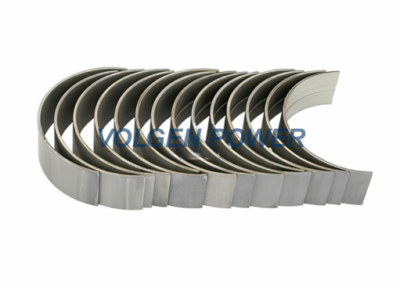
Oil Gallery Corrosion and Sludge Accumulation
What it looks like: Loss of oil pressure throughout the engine, noisy valve train (camshaft and lifters), and black sludge found in the oil galleries when the head is removed. The oil pressure warning light may illuminate at idle but not at higher RPMs.
Why it happens: The cylinder block contains a network of internal oil passages that supply lubricant to all bearings, the camshaft, and valve train components. Over time, carbon deposits and sludge accumulate in these passages, restricting flow. This is accelerated by using low-quality lubricants, skipping oil changes, or running engines that frequently experience short trips where the engine never reaches full operating temperature (preventing moisture from evaporating from the oil).
How to fix it: Remove the cylinder head and camshaft (if applicable), and pressure-test each oil gallery with solvent to check for restrictions. Restricted passages can sometimes be cleared using specialized chemical flushes. If passages cannot be cleared or if internal corrosion has damaged the bearing surfaces, the block must be replaced. Change to high-quality synthetic or semi-synthetic oil going forward.
Problem 5: Coolant Passage Erosion (Corrosion and Electrolysis)
What it looks like: Coolant turns dark or rusty within days of changing, the engine overheats, and internal coolant leaks are found when the head is removed. Corrosion deposits visible on internal coolant passages when the head is removed.
Why it happens: When incompatible coolants are mixed, micro-electrical currents flow through the coolant and literally eat away at the aluminum or iron of the block’s coolant passages. This creates rough, corroded surfaces that reduce coolant flow efficiency and eventually perforate the passage walls, causing internal coolant-to-oil leaks or coolant-to-combustion-chamber leaks.
How to fix it: If corrosion is minor and passages are not perforated, the block can be flushed and the cooling system cleaned with a neutralizing flush compound. If passages are perforated or severely corroded, block replacement is required. Going forward: use only the manufacturer-specified coolant type, never mix coolant brands or types, and check coolant condition every 6 months.
Problem 6: Cylinder Bore Warpage from Overheating
What it looks like: Oil consumption increases, white smoke from the exhaust (oil entering combustion chambers), and piston ring failure. On bore measurement, out-of-round cylinder bores are detected.
Why it happens: When an engine overheats, the cylinder bores can distort from circular to oval or out-of-round. This destroys the piston ring sealing surface, causing oil to pass into the combustion chamber (visible as blue/white smoke). Overheating can be caused by a failed thermostat, collapsed radiator hose, failing water pump, or blocked radiator core.
How to fix it: Bore distortion under 0.05mm can sometimes be corrected by honing. Severe distortion (over 0.10mm out-of-round) requires reboring to the next oversize pistons, or block replacement if already at maximum bore size. Always investigate and fix the overheating cause before rebuilding to prevent immediate repeat failure.
Problem 7: Core Plug (Freeze Plug) Failure
What it looks like: Coolant is leaking from the side of the engine block near the freeze plugs, especially after winter. May also cause airlocks in the cooling system, leading to intermittent overheating.
Why it happens: Freeze plugs (core plugs) are installed in the cylinder block as a manufacturing feature — they seal the holes left by the sand core during casting. In older engines, these are made from thin steel that corrodes over time. In freezing climates, freeze plugs can be pushed out by expanding ice if the coolant freezes. In warm climates, they simply corrode through from the inside due to degraded coolant.
How to fix it: Freeze plug replacement is a relatively simple repair — drain the coolant, remove the old plug (often requires drilling it out), clean the bore, and press or tap in a new replacement plug. Use the correct type (cup-type vs. disc-type) for your specific block. This is often done during head gasket replacement as a precautionary measure.

Step-by-Step Diagnosis: Identifying Which Problem Your Engine Has
Before ordering a replacement cylinder block, perform these diagnostic steps:
Oil pressure test — Check oil pressure at idle and 2,000 RPM. Low pressure at idle with normal pressure at higher RPM suggests oil gallery clogging or main bearing wear. Low pressure at all RPMs suggests severe bearing wear or oil pump failure.
Compression test — Low compression on all cylinders suggests ring or bore wear. Low compression on one cylinder suggests head gasket failure (not block damage). Normal compression with low power suggests a turbocharger or intake restriction.
Coolant system pressure test — Pressurize the cooling system with the engine cold. Rapid pressure loss suggests a head gasket leak (not block damage). Slow pressure loss over 15-20 minutes suggests a small external leak or seepage through the freeze plugs.
Borescope inspection — Insert a borescope through the spark plug/injector hole to visually inspect the cylinder wall for scoring, scratches, or ovality. This is the most accurate way to assess bore condition without disassembly.
Remove the cylinder head and inspect — With the head removed, inspect the top of the block for cracks (dye-penetrant test), corrosion in coolant passages, and the condition of the freeze plugs.
Bare Block vs. Short Block vs. Long Block: Which Do You Need?
Understanding the difference is critical before ordering. Ordering the wrong type means the part won’t fit and delays your repair:
| Type | What’s Included | What’s NOT Included | Best For | Est. Cost vs. Bare Block |
|---|---|---|---|---|
| Bare Block | Cylinder block only (no internals) | Pistons, crankshaft, head, camshaft, valve train | Full engine rebuild with your existing components; when only the block is damaged | 1x baseline |
| Short Block | Bare block + pistons + connecting rods + crankshaft | Cylinder head, camshaft, valve train, timing gears | Bottom-end failure (bearings, crankshaft, pistons damaged; head is OK) | 2-3x bare block |
| Long Block | Short block + cylinder head + camshaft + valve train + timing cover | Flywheel, turbocharger, intake/exhaust manifolds, accessories | Top-end failure or complete engine swap; fastest path to running engine | 4-6x bare block |
OEM Cylinder Block Cross-Reference: All Major Brands
Cummins Cylinder Blocks — Full Cross-Reference
| Engine Model | OEM Part No. | Displacement | Block Type | Est. Price (USD) |
|---|---|---|---|---|
| NT855 | Inquire | 14L | Bare block, Long block | $1,800-12,000 |
| KTA19 | 30883031 | 19L | Bare block | $2,200-3,200 |
| ISX15 / QSX15 | 4298515 / 2882088 | 15L | Cylinder block | $4,200-5,800 |
| QSB6.7 (Komatsu) | Inquire | 6.7L | Long block assembly | $6,500-9,200 |
Volvo and Mercedes Cylinder Blocks — Full Cross-Reference
| Engine Model | OEM Part No. | Displacement | Applications | Est. Price (USD) |
|---|---|---|---|---|
| Volvo D13 | 21310867 / 22056231 | 12.8L | FH16, FM, FH460 Euro 6 | $4,800-7,500 |
| Mercedes OM366 | 3660104008 | 9.6L | Actros, industrial | $2,800-3,800 |
| Mercedes OM501 | 5410102605 | 16.0L | Actros MP2/MP3, 40-ton | $3,200-4,500 |
Scania and Ford Cylinder Blocks — Full Cross-Reference
| Engine Model | OEM Part No. | Displacement | Applications | Est. Price (USD) |
|---|---|---|---|---|
| Scania DC12 | 2055383 / 2027585 | 11.7L | DC12 fleet durability | $3,500-4,800 |
| Scania DC13 | 2929222 / 2364500 | 12.7L | DC13 long-haul truck | $3,800-5,200 |
| Ford 13L | Inquire | 12.7L | Ford heavy-duty truck | $9,500-13,000 |
Interchangeable Cylinder Block Cross-Reference
The following table lists verified interchangeable cylinder block part numbers across major diesel engine brands. Cross-reference compatibility is confirmed by block casting number and mounting bolt pattern. Always verify against your engine serial number before ordering.
| Engine Brand | OEM Part Number | Compatible Models | Interchangeable With | Block Type |
|---|---|---|---|---|
| Ford | Ford 13L Long Block | Ford Cargo, Ford HTD, Ford F-Series Heavy Duty | Caterpillar 3406 Long Block (bolt pattern) | Long Block |
| Mercedes-Benz | 5410102605 | OM501 LA, OM541 LA, Actros MP2/MP3 | OM501 5410102705 (re-manifold version) | Bare Block |
| Volvo | 21310867 / 22056231 | Volvo D13 FH460, FM460, FMX (Euro 6) | Volvo 21310868 (high-compression variant) | Bare Block |
| Cummins | 4298515 / 2882088 | ISX15, QSX15, QSK15 (2002–2013) | Cummins 4298516 (pre-2007 variant) | Bare Block |
| Cummins | NT855 Long Block | NT855, NTC-335, KTA-855 (marine/industrial) | Cummins KTA19 block (same deck height) | Long Block |
| Komatsu / Cummins | 6D107 / QSB6.7 | Komatsu PC200-8, PC220-8, WA380-8 | Cummins QSB6.7 (identical casting, different bell housing) | Long Block |
| Scania | 2364500 / 2364375 | Scania DC13 102, DC13 114, DC13 124 | Scania 2364501 (Euro 5 variant) | Bare Block |
| Cummins | 3088303 | KTA19, KTA19-M, KTA19-P (marine/industrial) | Cummins NT855 (same deck, different displacement) | Bare Block |
| WeiChai | 612630010004 | WeiChai WP12, WP10, WD615 (China heavy-duty trucks) | Weichai WP12 block 612630010005 | Bare Block |
Note: Cross-reference compatibility should be confirmed with your engine serial number. Block casting numbers and mounting bolt patterns must match. Contact our technical team for verification before ordering.
How to Choose the Right Cylinder Block: 5 Buying Criteria
Bore Size and Oversize — Cylinder blocks come in standard bore and various oversizes (0.25mm, 0.50mm, 0.75mm, 1.00mm). If the original bore has been machined to oversize, you must order the block with the same oversize. Always measure the existing piston diameter to confirm.
Piston Type: Steel vs. Cast Iron — Some engines use steel pistons and others use cast iron. Steel piston engines require steel-backed cylinder liners; cast iron engines use direct-bore blocks. Order the correct block type for your piston material.
Main Bearing Journal Size — Crankshaft main bearing journals can vary by manufacturing batch. Always measure the crankshaft main journal diameters before ordering a bare block — the main bearing saddle bores in the new block must match.
Market-Specific Sourcing Guide
Turkey: Cummins and Ford Long Block Market
Turkish fleet operators running Cummins NT855 and Ford 13L engines frequently need cylinder block replacements. Long block assemblies (which include the cylinder head) are preferred for faster installation at Turkish workshops — a complete long block swap can be done in 2-3 days versus 5-7 days for a bare block rebuild.
Russia and CIS: Volvo D13 and Cummins K-Series Block Market
Russian mining and heavy transport operators run Volvo D13, Cummins KTA19, and NT855 engines. Cylinder blocks for these engines are among the most commonly imported heavy diesel parts from China into Russia. The Volvo D13 engine block (OE 21310867) is particularly frequently requested from operators in the Kuzbass and Khanty-Mansiysk mining regions.
Brazil: Volvo and Ford Dominant
Brazilian transport operators primarily use Volvo D11/D13 and Ford 13L engines. The Volvo D13 long block (OE 21310867 / 22056231) is the most commonly inquired part for Brazilian customers, especially for fleet operators in São Paulo, Rio Grande do Sul, and Paraná states.
Featured Cylinder Block Products
All parts below are verified against engine serial numbers before shipping. Long block assemblies include the cylinder head and are ready for installation. OEM and aftermarket options available for all major diesel engine brands.

Ford 13L Long Block Base Engine – OEM Quality Replacement for Heavy-Duty Trucks – VOLGEN POWER
View Product →
Mercedes-Benz Engine Block 5410102605 – OEM Quality Replacement for OM501 / OM541 Engines in Actros MP2/MP3 Trucks – VOLGEN POWER
View Product →

Volvo D13 Engine Block (OE 21310867 / 22056231) – Premium Replacement for FH 460 Euro 6 – VOLGEN POWER
View Product →

Cummins ISX15 / QSX15 Cylinder Block 4298515 / 2882088 – Genuine OEM Replacement for Heavy-Duty Engines – VOLGEN POWER
View Product →
Replacement Cost Summary: All Major Engine Brands
| Engine Brand | OEM Part Range | Bare Block (USD) | Long Block (USD) | Total Installed |
|---|---|---|---|---|
| Cummins NT855 | Inquire | $1,800-2,400 | $8,500-12,000 | $3,800-6,400 |
| Cummins ISX15/QSX15 | 4298515/2882088 | $4,200-5,800 | N/A | $6,700-10,300 |
| Volvo D13 | 21310867/22056231 | $4,800-7,500 | $8,000-12,000 | $7,300-12,000 |
| Mercedes OM501 | 5410102605 | $3,200-4,500 | N/A | $5,700-8,500 |
| Scania DC12/DC13 | 2055383/2929222 | $3,500-5,200 | N/A | $5,500-8,700 |
| Ford 13L | Inquire | N/A | $9,500-13,000 | $11,000-15,500 |
Related Engine Component Guides
Cylinder Head Repair Guide: When to Fix vs Replace — Complete Decision Matrix
Camshaft OEM Replacement Parts Guide — Full Cross-Reference
Crankshaft OEM Replacement Parts Guide — Full Cross-Reference
Volvo D13 Engine: Complete Technical Guide and Performance Review
Scania DC13 Cylinder Head Buying Guide: OEM vs Reman vs Aftermarket
Frequently Asked Questions (FAQ)
What are the most common diesel cylinder block problems?
The seven most common problems are: (1) Freeze cracking from coolant freezing, (2) Cylinder bore scoring from oil starvation, (3) Main bearing web cracks from crankshaft walk, (4) Oil gallery corrosion and sludge, (5) Coolant passage erosion from electrolysis, (6) Warpage from overheating, and (7) Core plug failure. For detailed diagnosis, see our cylinder head repair guide.
How much does it cost to replace a diesel cylinder block?
Cylinder block replacement costs range from USD 1,200-8,000 for bare blocks and USD 5,500-18,000 for long block assemblies. Total installed costs including labor range from USD 3,800-15,500 depending on engine brand. View our OEM diesel engine parts catalog for current pricing.
What is the difference between a bare block, short block, and long block?
A bare block is the cylinder block only with no internals. A short block includes the block plus pistons, connecting rods, and crankshaft. A long block includes everything in a short block plus the cylinder head, camshaft, and valve train. Browse our engine block replacement catalog for all options.
Can a cracked cylinder block be repaired instead of replaced?
Small freeze cracks in non-critical areas can sometimes be repaired with cold-welding compounds. However, cracks in cylinder bores, main bearing webs, or coolant passages always require block replacement. Consult our repair vs replace guide for detailed advice.
How do I know if my diesel engine block is failing?
Key diagnostic steps include: oil pressure test (check at idle and 2,000 RPM), compression test (low compression indicates bore wear), coolant system pressure test (detects leaks), and borescope inspection (visual cylinder wall assessment). Learn more in our diagnostic guide.
What causes freeze cracking in diesel engine blocks?
Freeze cracking occurs when engine coolant freezes and expands by approximately 9% in volume. This is common in Russia, Kazakhstan, northern China, and Scandinavia where temperatures drop below -20°C. Always use coolant rated 10°C below the lowest expected temperature. See our Volvo D13 technical guide for cold climate specifications.
Are Cummins and Volvo cylinder blocks interchangeable?
Generally, Cummins and Volvo cylinder blocks are not interchangeable due to different mounting patterns and bore specifications. However, some Komatsu/Cummins blocks share identical castings. Always verify compatibility using your engine serial number. Check our interchangeable cross-reference table above for verified compatible part numbers.
How often should I replace the freeze plugs in my engine block?
Steel freeze plugs typically corrode within 5-10 years and should be inspected during every major service. We recommend replacing them with brass plugs which last significantly longer. Replacement is often done during head gasket replacement as a precautionary measure.
What is cylinder bore scoring and how is it fixed?
Cylinder bore scoring occurs when piston rings fail to maintain an oil film, causing vertical scratches on the cylinder wall. Light scoring can be corrected by honing; severe scoring requires reboring to the next oversize. The root cause is usually contaminated oil or failed crankshaft bearings affecting oil pressure.
Where can I buy genuine OEM cylinder blocks for Cummins, Volvo, and Mercedes engines?
Volgen Power supplies genuine OEM and high-quality aftermarket cylinder blocks for all major diesel engine brands including Cummins, Volvo, Mercedes-Benz, Scania, and Ford. All parts are verified against engine serial numbers before shipping. Browse our cylinder block catalog or contact our technical team for assistance.