Quick Answer: Common bad camshaft position sensor symptoms in heavy-duty diesel engines include extended cranking, hard starting, sudden stalling, rough idle, engine derate, loss of power, uneven combustion, and fault codes such as P0340 or P0341. However, these symptoms do not always prove that the sensor itself has failed. Damaged wiring, connector problems, incorrect sensor clearance, a worn tone wheel, camshaft wear, excessive bushing clearance, or damaged timing gears may produce similar faults. Before replacing parts, verify the CMP and CKP signals, inspect the mechanical timing system, and confirm the engine model, serial number, and OEM part numbers.
The camshaft position sensor helps the engine control unit identify camshaft position and cylinder phase. Its signal works together with the crankshaft position sensor to support injection synchronization, starting control, fault monitoring, and engine protection.
For fleet maintenance teams, engine rebuilders, repair workshops, and parts distributors, the correct response to a CMP fault is not blind sensor replacement. The electrical circuit, cam/crank correlation, tone wheel, camshaft, bushings, timing gears, and related valvetrain components should be evaluated before replacement parts are ordered.
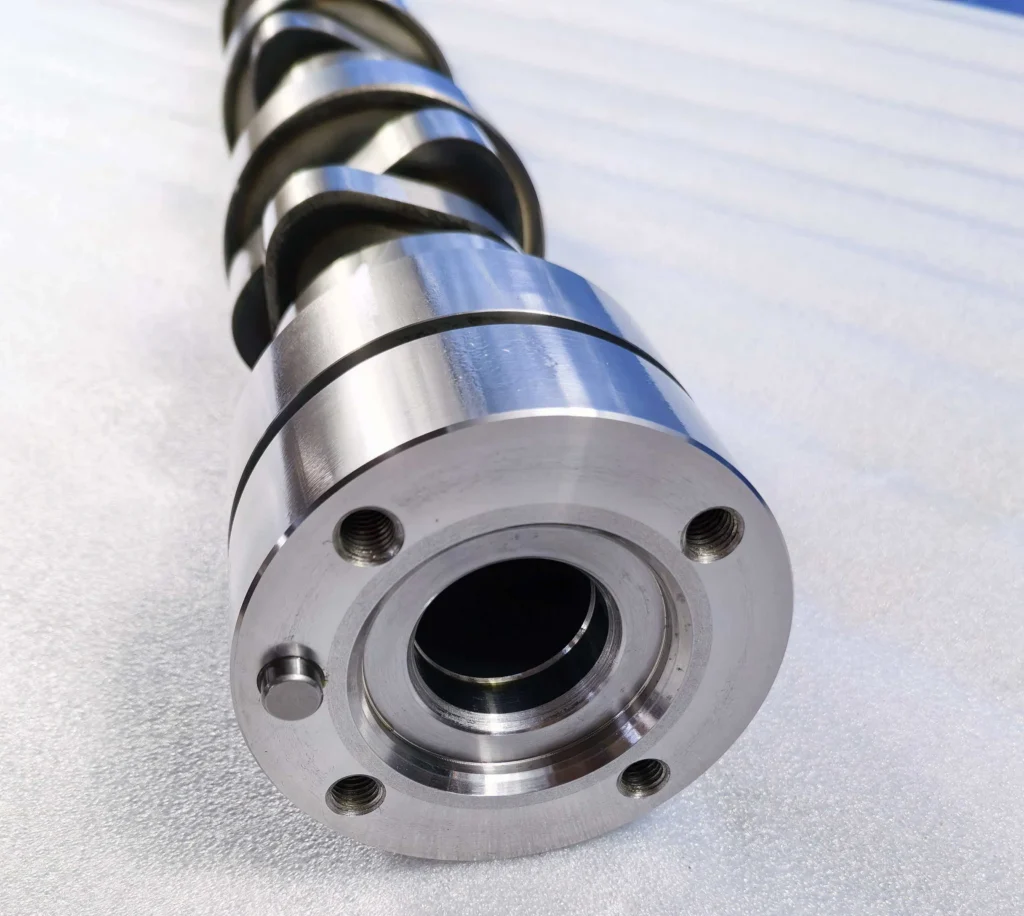
Buyer note: If you already have an OEM number, engine model, sensor photo, or fault code report, send it to Volgen Power for compatibility checking before bulk purchase.
Request an OEM Compatibility Check for Camshaft and Timing Components
A camshaft position sensor fault does not always require a new sensor. In heavy-duty diesel engines, repeated synchronization faults may also be related to camshaft wear, excessive bushing clearance, damaged timing gears, an incorrect tone-wheel position, or other internal engine problems.
Volgen Power supplies heavy-duty diesel engine components for commercial vehicles, construction machinery, marine engines, and power-generation applications.
Our main product range includes:
- Camshafts
- Camshaft bushings and bearings
- Timing gears and camshaft gears
- Cylinder head and valve-train components
- Engine overhaul parts
- Related diesel engine timing components
To check compatibility, please provide:
- Engine brand and model
- Engine serial number
- Existing OEM or cross-reference number
- Photos of the original component
- Fault codes or inspection findings
- Required quantity
- Destination country
Our team will review the available information and help identify the appropriate camshaft, timing,g or engine components for your application.
Request an OEM Compatibility Check →
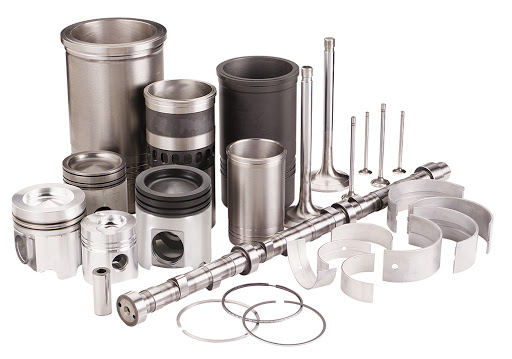
What Is a Heavy-Duty Camshaft Position Sensor?
A camshaft position sensor monitors the camshaft's rotational position and sends timing data to the engine control unit (ECU). In heavy-duty diesel engines, this signal helps the ECU coordinate:
- Fuel injection timing
- Cam/crank correlation monitoring (valve-timing control on engines equipped with variable cam timing)
- Cam/crank synchronization
- Start sequence control
- Engine protection logic
- Emission system operation
The camshaft position sensor works together with the crankshaft position sensor. If the ECU cannot compare both signals correctly, it may trigger diagnostic trouble codes such as:
- P0340 — Camshaft Position Sensor Circuit Malfunction
- P0341 — Camshaft Position Sensor Range/Performance
- P0335 — Crankshaft Position Sensor Circuit Malfunction
- P0016 — Camshaft/Crankshaft Correlation Fault
In commercial diesel applications, a CMP signal problem should not be treated as merely a small electrical issue. It may indicate sensor failure, wiring damage, tone wheel problems, timing gear wear, or incorrect component matching.
Note: Heavy-duty vehicles may display SAE P-codes, J1939 SPN/FMI combinations, or manufacturer-specific diagnostic codes. Always verify the code definition against the exact engine model, ECM calibration, and OEM service information.
10 Heavy-Duty Camshaft Position Sensor Symptoms Buyers Should Not Ignore
The following symptoms can help identify whether the camshaft position sensor, crankshaft position sensor, wiring harness, or timing components need inspection before ordering replacement parts.
| Symptom | Possible Cause | Buyer Action |
| Check engine light with P0340/P0341 | Sensor signal missing or unstable | Confirm OEM number and sensor type before replacement |
| Extended cranking | ECU cannot confirm camshaft position | Check sensor, wiring, and crankshaft signal together |
| No-start condition | No valid timing signal | Verify CMP/CKP synchronization before ordering |
| Sudden stalling | Intermittent signal loss | Inspect connector, harness, and sensor tip |
| Rough idle | Timing signal fluctuation | Check waveform and possible mechanical timing wear |
| Loss of power | ECU enters protection or derate mode | Confirm whether sensor or timing component caused fault |
| Misfire or uneven combustion | Incorrect injection timing | Inspect both sensor signal and injector timing data |
| Poor fuel economy | ECU uses inefficient fallback strategy | Replace only after confirming sensor specification |
| Harsh shifting or AMT behavior (secondary effect) | Possible indirect effect: engine synchronization fault may affect torque coordination or shift quality on integrated powertrain systems | Verify CKP data, engine torque signals, CAN faults, and transmission speed sensors before attributing to CMP sensor |
| DPF or emission faults (possible secondary effect) | Poor combustion from timing issues may increase soot production | Inspect timing accuracy, sensor signal quality, and injector performance before associating with CMP fault |
These symptoms are useful for diagnosis, but they should not lead to blind replacement. For heavy-duty engines, wrong sensor selection can cause repeated fault codes even after installation. A CMP fault does not directly prove a DPF failure. Excess soot, failed regeneration, injector faults, boost leaks, EGR faults, and exhaust-temperature sensor issues must be diagnosed separately.
Camshaft Position Sensor vs Crankshaft Position Sensor: Why Matching Matters
The camshaft position sensor and crankshaft position sensor are often checked together because the ECU compares both signals.
| Item | Camshaft Position Sensor | Crankshaft Position Sensor |
| Main role | Identifies camshaft timing and cylinder phase | Measures crankshaft speed and position |
| Common fault codes | P0340, P0341 | P0335, P0336 |
| Common symptoms | Hard start, derate, rough idle, timing fault | No-start, stalling, tachometer drop, ECU sync loss |
| Sourcing risk | Wrong signal type or connector | Wrong tooth count/signal type/installation depth |
| Buyer requirement | OEM number, engine model, connector photo | OEM number, flywheel/tone wheel match, engine model |
When the Problem Is Not the Camshaft Position Sensor
A camshaft position sensor fault code does not always mean that the sensor itself has failed. The same symptoms or diagnostic codes may also be caused by damaged wiring, incorrect sensor clearance, a worn tone wheel, or mechanical timing problems inside the engine.
If the sensor circuit, connector, power supply, ground, and signal output test correctly, the next step is to inspect the related mechanical timing components.
Potential mechanical causes may include:
- Worn or damaged camshaft lobes or journals
- Excessive camshaft bushing or bearing clearance
- Worn timing gears or camshaft gears
- A loose or damaged reluctor or tone wheel
- Incorrect camshaft-to-crankshaft timing
- Valve-train or cylinder-head component wear
- Internal engine damage requiring overhaul parts
Do not replace the camshaft position sensor repeatedly without confirming the root cause. For heavy-duty diesel engines, the camshaft, timing components,s and sensor signal must be evaluated as one complete synchronization system.
When mechanical wear is suspected, provide the engine model, engine serial number, existing OEM numbers, component photos, os and diagnostic information before ordering replacement parts.
A bad camshaft position sensor is not always caused by the sensor itself. Heavy-duty engines operate under heat, vibration, oil contamination, and long service hours. Common causes include:
- Internal sensor failure — Heat and vibration can damage the sensor circuit or magnetic element.
- Oil contamination or metal debris — Sludge or metal particles near the sensor tip can distort the signal.
- Damaged wiring harness — Cracked insulation, loose pins, or corroded connectors can create intermittent faults.
- Tone wheel or reluctor damage — Broken teeth or incorrect alignment can generate unstable signals.
- Mechanical timing wear — Timing gear, chain, or camshaft wear can trigger cam/crank correlation codes. Verify the waveform against the manufacturer’s specification before concluding that deeper mechanical components are involved.
- Incorrect aftermarket sensor — A sensor may physically fit but produce the wrong waveform, voltage range, or signal timing.
For B2B sourcing, the final point is especially important. Matching only by appearance is risky. Always match by OEM number, engine model, connector type, sensor length, signal type, and application.
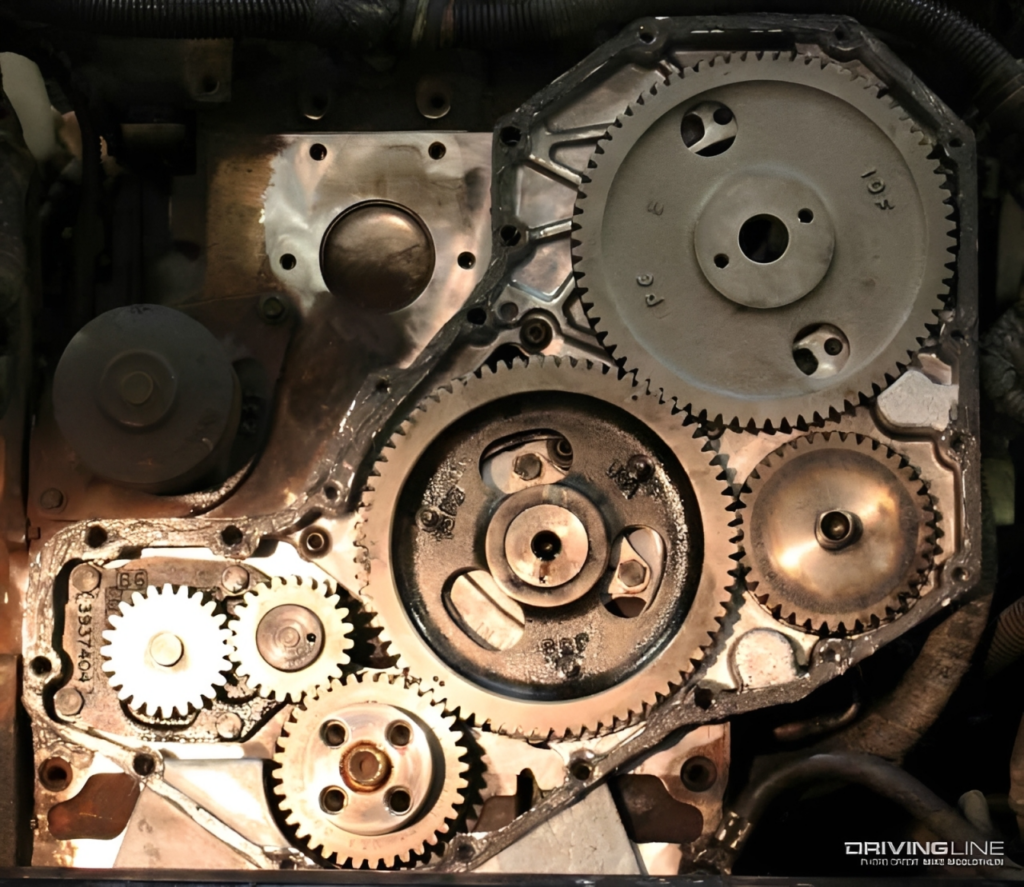
OEM Matching for Camshaft and Timing Components
When the diagnostic process points to a mechanical timing issue rather than a sensor fault, the next step is to identify the correct replacement component. The table below outlines the information required for common camshaft and timing system parts.
| Component | Information Required |
| Camshaft | Engine model, ESN, OEM number, cam lobe configuration |
| Camshabushing/bearinging | Engine model, journal position, inner/outer diameter |
| Timing gear / camshaft gear | OEM number, tooth count, bore size, gear position, keyway |
| Cylinder head components | Engine model, cylinder head number, valve-train configuration |
| Overhaul parts | Engine model, ESN, bore size, repair stage, OEM part number |
| Complete timing system | Engine family, timing layout, existing part numbers, photos |
Sensor-related information: If available, include the camshaft sensor fault code, connector photo, and waveform report. These details can help determine whether the problem is electrical or related to the mechanical timing system.
Diagnostic Process Before Ordering Replacement Sensors
For fleet maintenance teams and diesel repair shops, the goal is to avoid repeated replacement. Use this process before ordering parts:
- Confirm the Fault Code — Check whether the ECU reports P0340, P0341, P0335, P0016, or multiple related codes.
- Inspect Connector and Harness — Look for oil intrusion, corrosion, loose pins, broken wires, or heat damage.
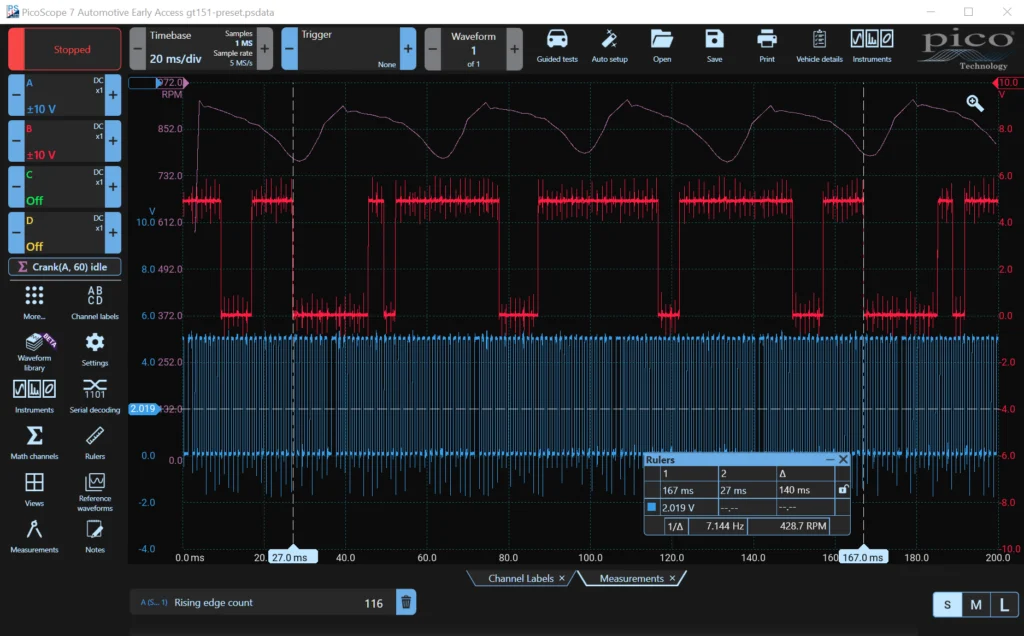
- Check Sensor Signal — A multimeter can confirm voltage and ground, but an oscilloscope is better for waveform inspection.
| Sensor Type | Signal Output | Diagnosis Focus |
| Hall effect sensor | Digital square wave | Duty cycle, voltage stability, signal interruption |
| Magnetic sensor | AC sine wave | Amplitude, frequency, low-speed signal quality |
- Compare CMP and CKP Signals — A shifted cam/crank pattern may indicate timing gear wear, chain stretch, or tone wheel damage. Verify the waveform against the manufacturer’s specification before concluding that deeper mechanical components are involved.
- Confirm Replacement Specification — Only after confirming the sensor is the likely failure point should buyers match the replacement part by OEM number and engine model.
OEM vs Aftermarket Camshaft Position Sensors: What Buyers Should Check
Not all aftermarket sensors are equal. For heavy-duty diesel applications, low-quality sensors can create repeat faults, unstable signals, and warranty disputes.
| Checkpoint | OEM Sensor | Quality Aftermarket Sensor | Low-Quality Risk |
| Signal accuracy | Factory standard | Must match OEM output | Wrong waveform or unstable signal |
| Connector fit | Exact | Must be verified | Loose or incompatible plug |
| Heat resistance | High | Should meet engine environment | Premature failure |
| Application data | Clear | Must include cross-reference | Wrong engine match |
| Warranty support | Brand dependent | Supplier dependent | Hard to claim if no traceability |
When a Sensor Fault Means a Bigger Engine Component Problem
A repeated P0340 or P0016 code after sensor replacement can indicate deeper mechanical wear. Possible related parts include:
- Camshaft
- Camshaft bushing
- Timing gear
- Crankshaft position sensor
- Tone wheel / reluctor wheel
- Cylinder head components
- Wiring harness
- ECU connector
This is why a procurement-focused diagnostic process matters. If the root cause is timing gear or camshaft wear, ordering only a sensor will not solve the downtime problem. Volgen Power can support buyers who need not only sensors but also related diesel engine components. Submit your engine model and OEM number for a compatibility check.
Compare CMP and CKP Signals
Camshaft and Timing Components RFQ Checklist
Before sending an RFQ, use this checklist:
- OEM number or existing part number
- Engine brand and model
- Vehicle or equipment model
- Sensor photos from multiple angles
- Connector photo
- Fault code or diagnostic report
- Required quantity
- Destination country
- Packaging requirements
- Required lead time
- Warranty expectations
FAQs.
What are the most common heavy-duty camshaft position sensor symptoms?
Common symptoms include hard starting, no-start condition, rough idle, sudden stalling, derate mode, loss of power, misfires, poor fuel economy, and P0340 or P0341 fault codes.
Can a bad camshaft position sensor stop a diesel engine from starting?
Yes. If the ECU cannot confirm camshaft position, it may not control injection timing correctly. This can cause extended cranking or a no-start condition.
Should I replace the camshaft position sensor immediately after a P0340 code?
Not always. A P0340 code can come from a failed sensor, wiring issue, connector damage, tone wheel problem, or mechanical timing wear. Confirm the root cause before ordering parts.
What information is needed to source the correct replacement sensor?
The most important information includes OEM number, engine model, vehicle or equipment model, connector photo, sensor photo, and quantity.
Is the camshaft position sensor the same as the crankshaft position sensor?
No. The camshaft position sensor identifies camshaft timing and cylinder phase, while the crankshaft position sensor measures crankshaft position and speed. The ECU often compares both signals.
Can aftermarket camshaft position sensors work for heavy-duty diesel engines?
Yes, but only if the sensor matches OEM specifications for signal output, connector, mounting depth, heat resistance, and application. Poor-quality sensors may trigger repeat fault codes.
What should I do if a new sensor does not fix the fault code?
Check wiring, connector condition, tone wheel condition, and cam/crank synchronization. A repeated code after replacing the sensor may indicate a timing-related issue beyond the sensor itself. Follow a structured diagnostic process: inspect the connector and wiring, verify the sensor signal, check the tone wheel and air gap, and compare CMP/CKP waveform correlation before investigating deeper mechanical components.